
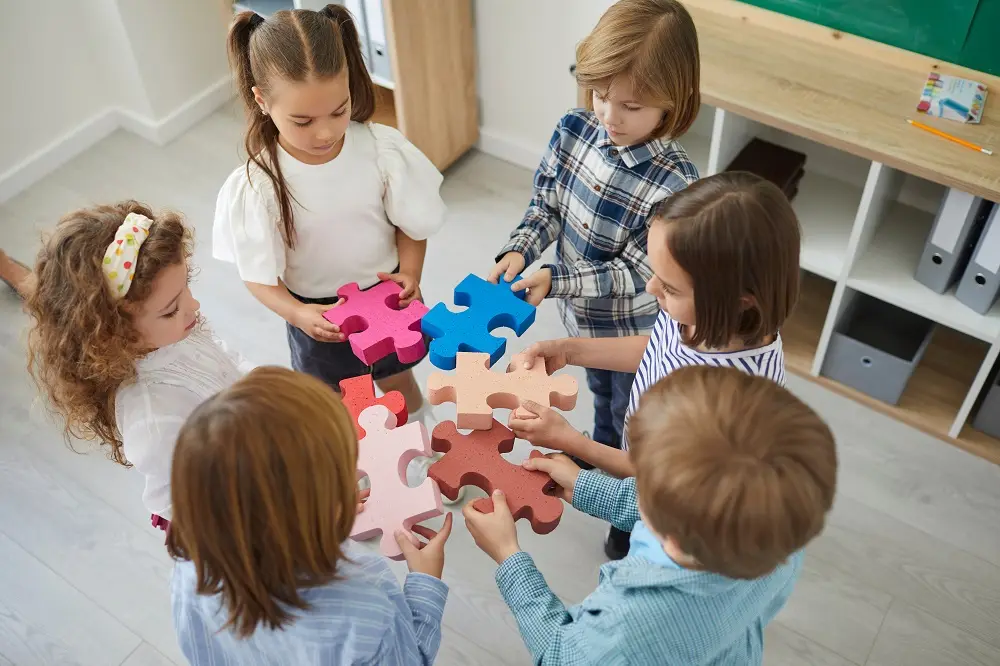
Team building activities for kids can be especially useful during kindergarten. At this age, children are still learning how to communicate, cooperate and solve problems with classmates. When you use fun and interactive team building activities, you give children a chance to practice these skills through play.
In our experience working with kids, simple activities often work best when every child has a clear way to participate. You can use these 15 team building games and activities for kindergarten indoors or outside. Choose activities based on your space, group size and how much movement your children need.
Why Team Building for Kids Matters in Kindergarten
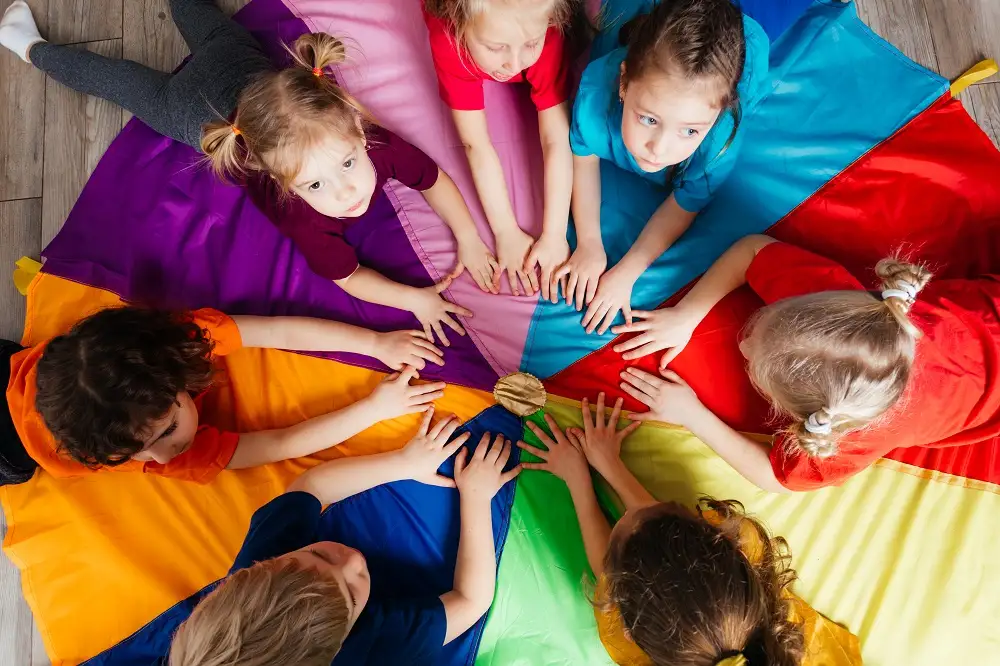
Team building in kindergarten helps children practice the social skills they use every day at school. When you give students a shared goal, they have a reason to listen, take turns and solve problems together.
Here’s how kindergarten students benefit from team activities:
- Stronger social skills: You give children opportunities to practice taking turns, sharing, listening to other ideas and respecting different points of view.
- Better cooperation: Children see how working together can make a challenge easier and more enjoyable.
- Problem-solving practice: Team challenges let kids test ideas, make changes and find solutions with classmates.
- More confidence: When children complete a challenge together, they can feel proud of their contribution and build self-esteem.
We’ve found that team building for kids tends to work best when the instructions are easy to understand. The challenge should still give children a reason to cooperate. You can start with short games before moving into longer group activities.
Outdoor Team Building Games for Kindergarten
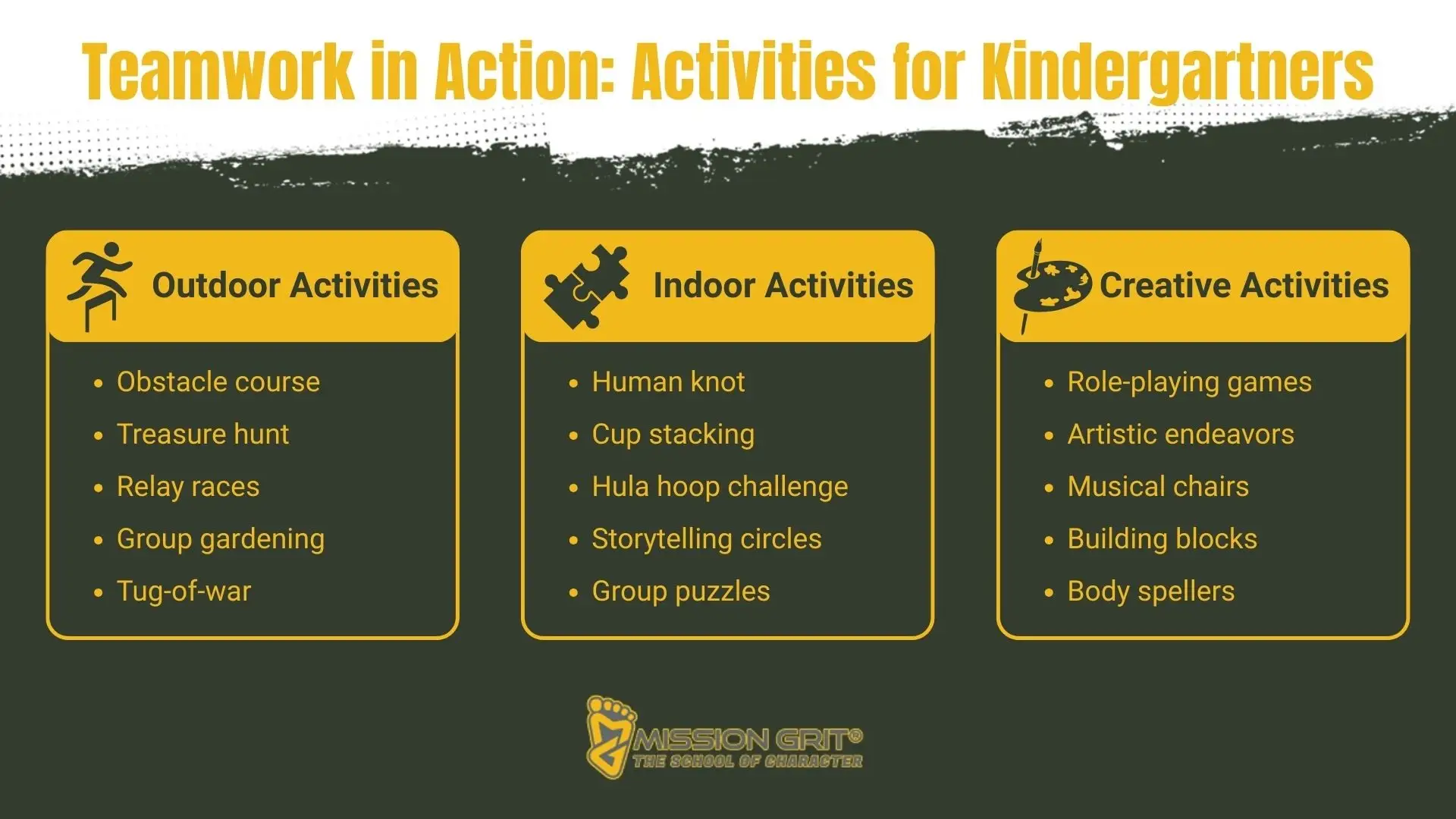
Outdoor team building games give your kindergarten students room to move while practicing teamwork. You can run these activities with a whole class or divide children into smaller teams.
1. Treasure Hunt
A treasure hunt asks kindergartners to work together to solve clues and find a hidden object. You can let children divide tasks, search different areas and share observations with teammates.
Because everyone works toward the same goal, children have a natural reason to communicate and help each other. Finishing the hunt together can also build confidence and a sense of group success.
2. Relay Races
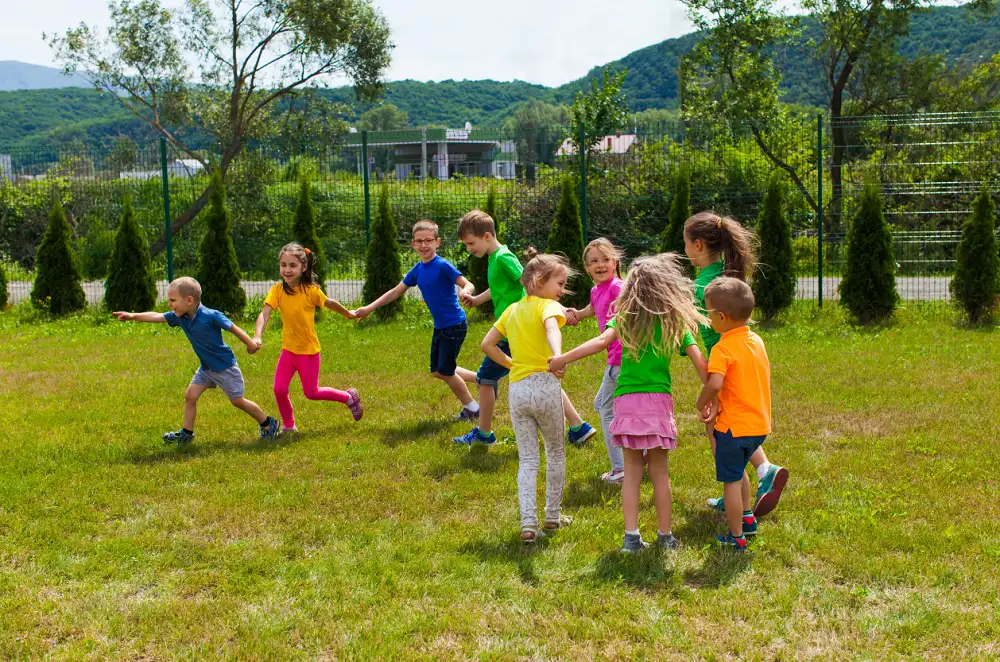
Relay races combine movement with teamwork. You can divide students into teams and create a short course. Each child completes one task before the next teammate begins.
As the race continues, children practice waiting for their turn, encouraging teammates and working toward a shared finish.
3. Group Gardening
Group gardening gives your children an outdoor project that continues beyond a single class period. You can give each team a garden plot or several pots. Students can plant, water and care for their plants together.
Give children simple jobs such as watering, checking soil and removing weeds. Over time, they can see how repeated teamwork affects the growth of their garden.
4. Tug-of-War
Tug-of-war is a classic team building game that shows kindergarten students what coordinated effort feels like. Two teams hold opposite ends of a rope and work together to pull in the same direction.
You’ll want to keep teams balanced and supervise the activity closely. Keep the focus on teamwork and group effort rather than only on which team wins.
5. Obstacle Course
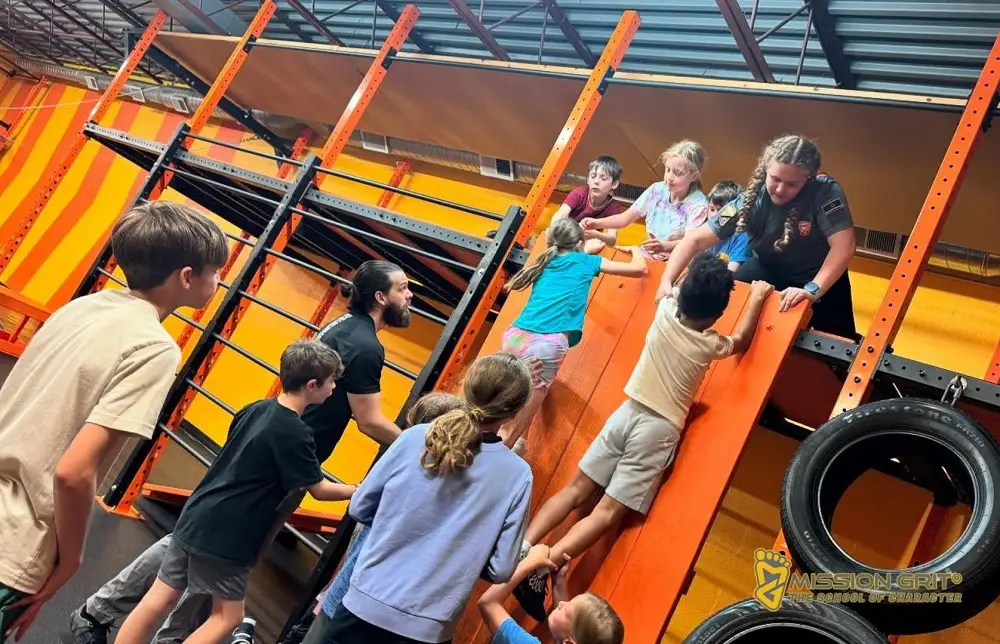
Obstacle courses combine physical activity with teamwork exercises. You can set one up indoors or outdoors and adjust it to fit your available space.
At Mission Grit, obstacle activities are one way we get kids moving and working with others at the same time. You can take the same basic approach by pairing children or creating small teams. Ask them to encourage each other, complete parts of the course together or solve simple challenges along the way.
These activities can help children practice gross motor skills, verbal communication and problem-solving. You can build a DIY obstacle course or use a space designed for children’s obstacle activities.
Indoor Group Activities and Teamwork Games for Kindergarten
Indoor group activities for kindergarten can work well when weather or space limits outdoor play. Smaller groups can also give quieter children more chances to participate and communicate.
You can use these teamwork activities for kids in a classroom, gym or activity room. Most require only simple materials.
6. Human Knot
The Human Knot gets your students thinking and moving together. Have students stand in a circle and hold hands with two classmates across from them. This creates a tangled knot.
Then ask the group to untangle itself without releasing hands. Children need to communicate, listen and test different movements together.
We’ve found that younger groups often do better when you start small. Using fewer children can make the activity easier to understand before you try a larger circle.
7. Cup Stacking
Cup stacking challenges small teams to build a structure with plastic cups. You can give the group a simple goal, such as building the tallest tower that can stand on its own.
Encourage students to discuss their plan and decide who will handle different parts. Along the way, they also practice fine motor skills and following verbal instructions.
8. Hula-Hoop Challenge
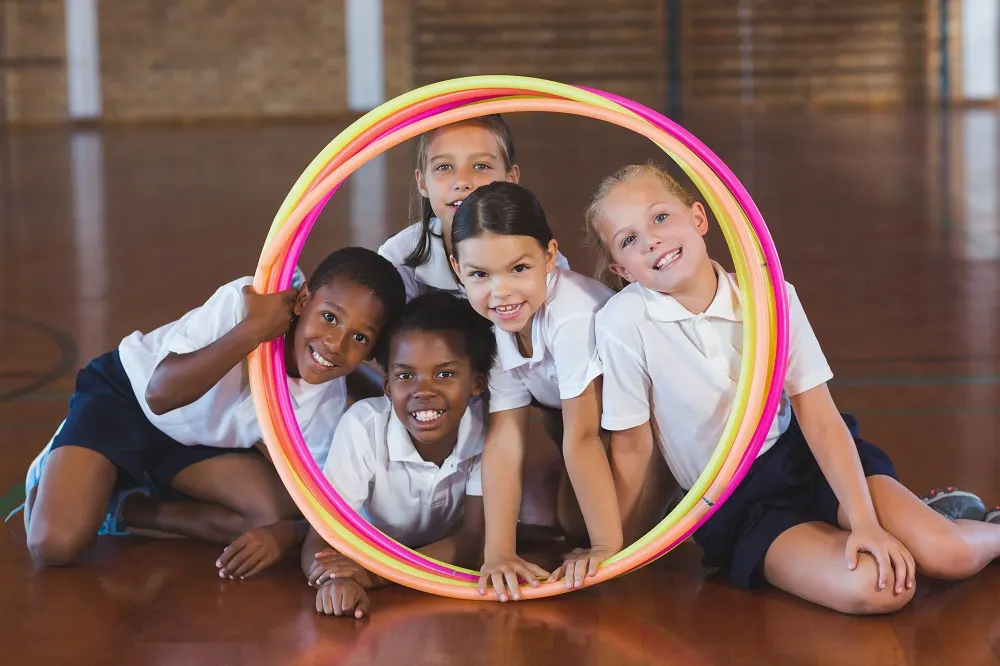
For the hula-hoop pass, have students stand in a circle and hold hands. Place a hula-hoop between two children. Then ask the group to move it around the circle without releasing hands.
Children need to adjust their movements and help the person beside them. As they play, they can see how each group member affects the team’s progress.
9. Storytelling Circles
Storytelling circles give your kindergartners practice speaking and listening. Gather the children in a circle and begin a story. Then let each child add a sentence or two.
To keep the story moving, students need to listen to what came before their turn. The activity mixes imagination with communication and group participation.
10. Group Puzzles
Give children age-appropriate puzzles and divide them into small groups. Ask each group to solve its puzzle together.
You can encourage students to discuss where pieces might fit, divide sections of the puzzle and help classmates who get stuck.
Group puzzles give kindergarten students a simple way to practice teamwork and problem-solving at the same time.
As you watch the groups work, you can see how students share materials, communicate and respond when an idea doesn’t work. In our experience, those small interactions can tell you more than simply seeing which group finishes first.
Creative Teamwork Activities for Kids in Kindergarten
Creative teamwork activities for kids combine imagination with cooperation. You can use these games with children who enjoy art, storytelling, music or building.
11. Role-Playing Games
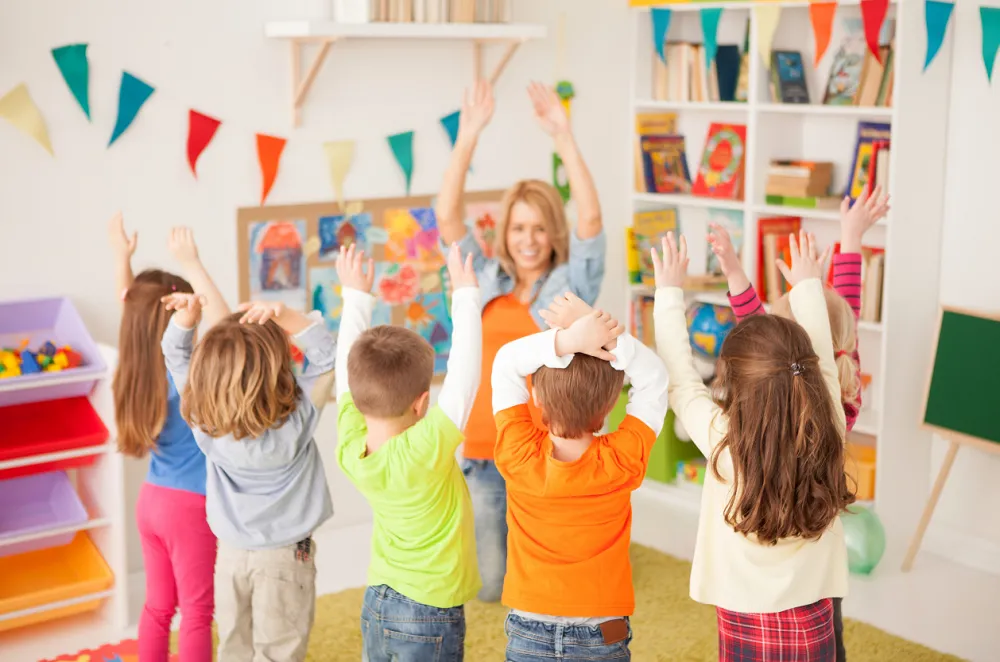
Role-playing gives kindergartners a chance to see situations from another person’s point of view. Give children simple roles or scenarios and ask them to act them out together.
You can use familiar situations such as sharing supplies, joining a game or helping a classmate. As children participate, they practice listening and responding to each other.
12. Group Art Projects
Group art projects ask kindergartners to create something together. You might choose a class mural or collage so several children can contribute at the same time.
Let students discuss ideas, divide tasks and decide how their individual work will fit into the finished project.
13. Musical Chairs
Musical chairs is also a popular birthday party activity. For a kindergarten teamwork version, you can focus on sharing space rather than eliminating players.
Have students move around the chairs while music plays. When it stops, ask them to find ways for everyone to have a place. This gives kids practice sharing, taking turns and helping classmates stay involved.
14. Building Blocks
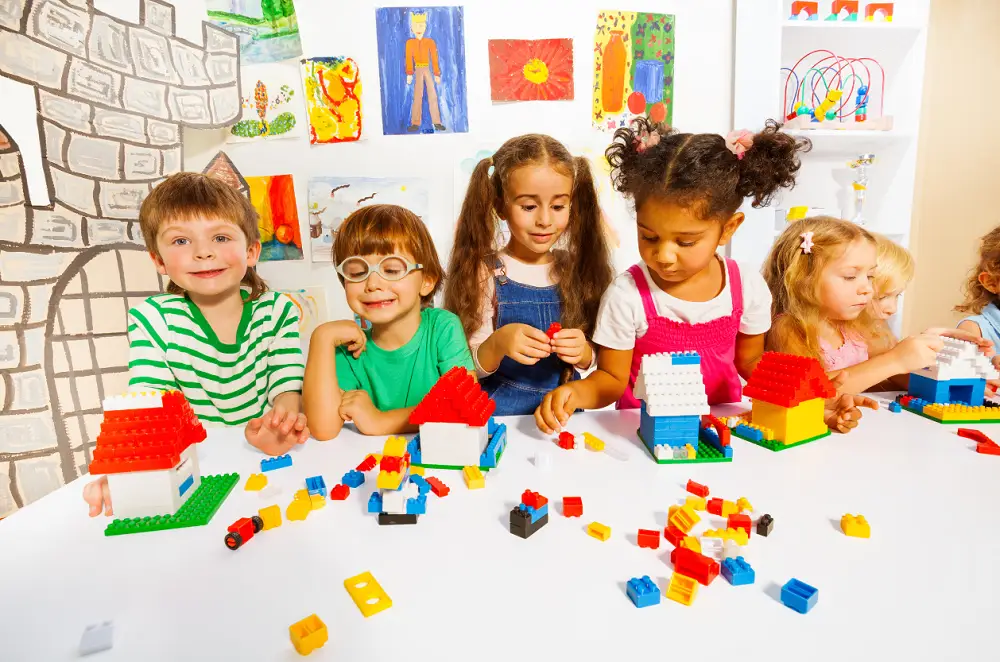
Give each group building blocks or other age-appropriate materials. Then ask students to work together on one structure.
Before they start building, encourage the group to agree on what it wants to make. Children can divide jobs and adjust their plan as the structure takes shape.
As you guide the activity, students get practice explaining ideas, listening to suggestions and making group decisions.
15. Body Spellers
Body Spellers combines movement with early spelling practice. Give each small team a simple word or letter to form using their bodies.
Students need to position themselves, give directions and help classmates make adjustments. If you’re working with younger students, short words or individual letters can make the activity easier to follow.
How to Choose Team Building Activities for Kindergarten
The best activity for your group depends on your space and the skill you want children to practice. Start by choosing one simple goal for the activity.
Use smaller group activities when you want children to have more chances to talk or take turns. Active games can work well when your students need movement. Creative activities can help when you want children practicing communication or shared decision-making.
From our experience running activities with kids, shorter first rounds usually make it easier to teach a new game. Once children understand the rules, you can add another challenge or give them more independence.
Tips for Running Kindergarten Team Building Activities
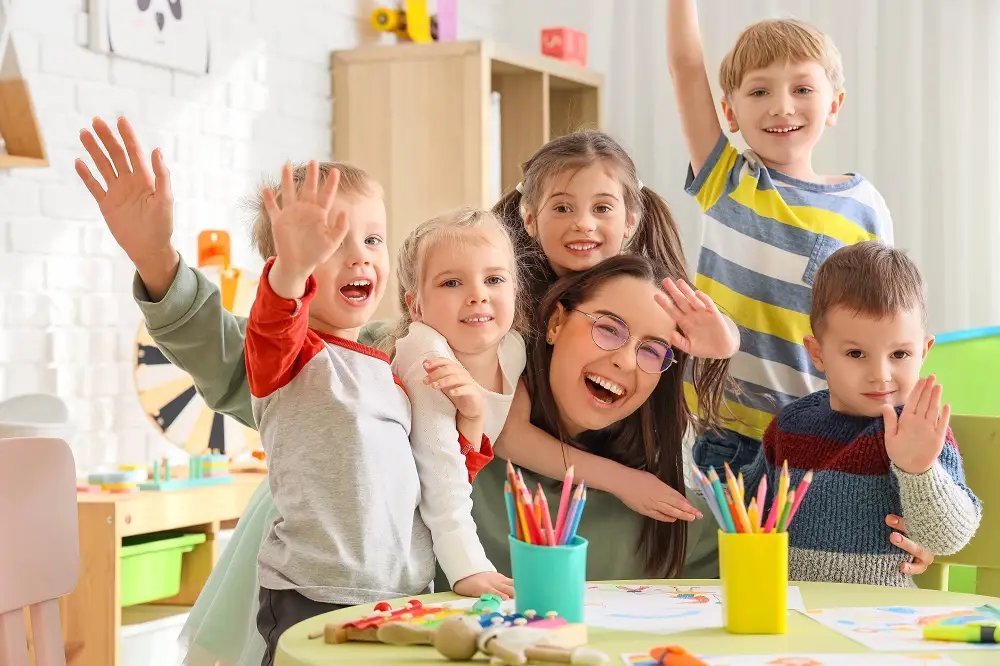
How you introduce an activity can affect how well the group works together. Give simple instructions and make the teamwork goal clear before students begin.
- Match the age group: Choose activities that fit your students’ attention spans, physical abilities and communication skills.
- Give clear instructions: Explain the activity in short steps and demonstrate it when needed.
- Give everyone a role: Set up the activity so each child has a way to contribute.
- Keep safety in mind: Check your space and materials before active games begin.
- Focus on cooperation: Praise listening, helping and problem-solving rather than only rewarding the winning group.
We’ve found that kids may need more than one attempt before a new team game runs smoothly. That’s normal. A short practice round can help children understand the activity and the teamwork you expect.
How to Tell Whether Team Building Activities Are Working
You can watch for changes in how children work with other kids. Look for signs that skills practiced during the activity are starting to appear in other group situations.
- Watch group behavior: Look for better listening, turn-taking, sharing and willingness to ask teammates for help.
- Compare what adults notice: Teachers and parents can look at how a child handles teamwork in different settings.
- Adjust the difficulty: Make a game simpler if children spend more time confused than cooperating. Add a new challenge when the group completes it too easily.
- Watch participation: Notice whether the same children lead every activity or quieter students also get chances to contribute.
In our experience, the strongest sign of progress isn’t winning a game. It’s seeing children communicate, help each other and stay involved when a challenge gets difficult. These observations can help you choose future activities that fit your group’s needs.
Team Building Activities for Kids in Charlotte
Team building activities for kids give your child a practical way to work on cooperation, communication and problem-solving through play.
At Mission Grit in Charlotte, we work with kids through obstacle activities and group challenges centered on physical, mental, social and character development. That hands-on experience shapes how we approach team building with children.
We’ve seen how giving kids a clear challenge and a chance to work together can create opportunities for communication and confidence. Mission Grit also offers birthday parties, summer camps and other programs for children.
Mission Grit reports that 100 percent of parents see improved confidence in their child. If you’d like your child to experience this type of active team building, contact us to learn more about programs and activities for kids in Charlotte.