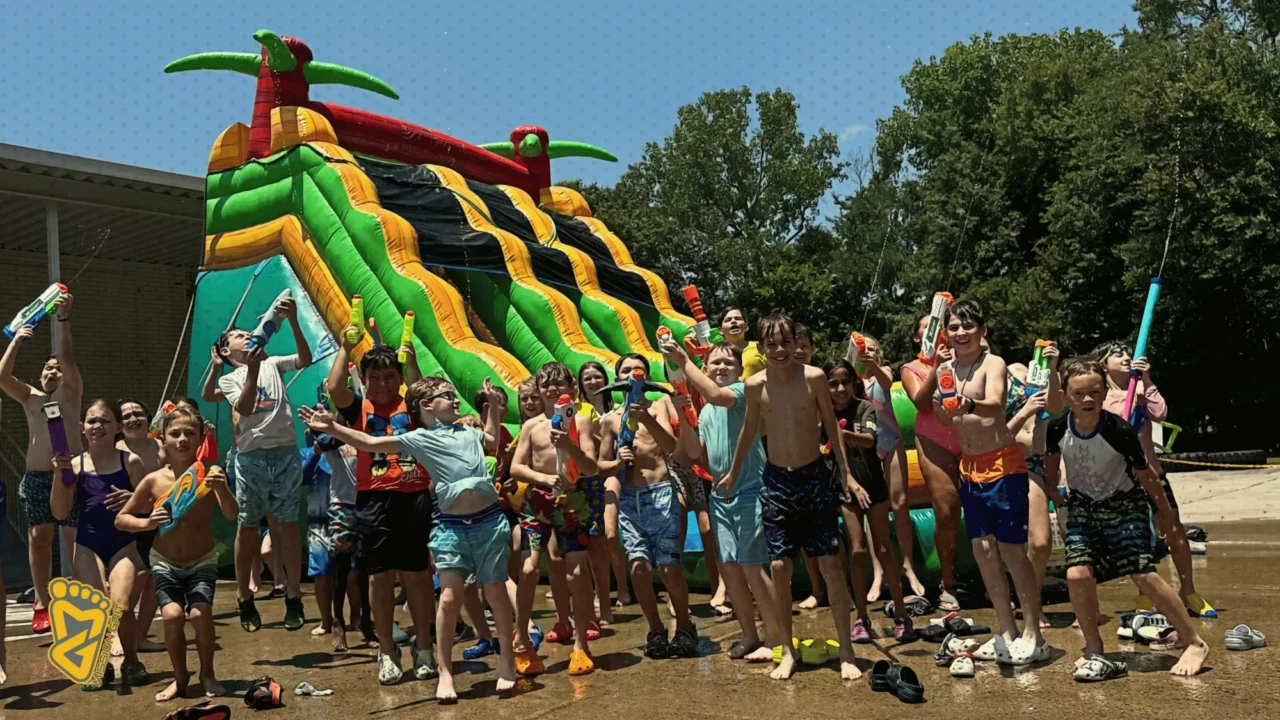
Finding the right summer camps for shy kids (Charlotte NC) can feel overwhelming when traditional options emphasize competition and performance. Your quiet, thoughtful child deserves an environment where they can grow at their own pace, building confidence through collaboration rather than rivalry.
Mission Grit offers a team-based alternative. Located at 6311 Carmel Rd in Charlotte, this leadership summer camp uses obstacle courses and collaborative challenges to help reserved children discover their strengths without the pressure of winning or losing.
TL;DR: Summer Camps for Shy Kids in Charlotte, NC
The best summer camps for shy kids prioritize small groups, trained staff, and cooperative activities over competition. Mission Grit Leadership Summer Camp in Charlotte uses team-based obstacle courses and the S.P.I.R.I.T method to build confidence gradually. With structured activities, 1:4-1:8 staff ratios, and an indoor facility, shy children ages 7 and up can develop social skills in a supportive, non-competitive environment.
Key Points:
- Small group formats with 6-12 children and low counselor ratios reduce sensory overload and enable personalized attention
- Cooperative learning shows effect sizes of 0.612 for social development, helping shy kids build peer relationships
- Predictable schedules with 30-60 minutes of daily downtime help children recharge between social activities
- Team challenges foster collaboration without creating winners and losers
- Program runs 8:00 AM to 4:00 PM with flexible drop-off and pick-up times
 What Shy Kids Need From a Summer Camp (and what to avoid)
Shy children aren’t broken or behind schedule. They process social situations differently, needing thoughtful environments that honor their temperament while gently expanding their comfort zone. The right summer camp can transform a hesitant child into a confident team member, but the wrong fit can reinforce anxiety and withdrawal.
Understanding what supports or hinders shy children helps parents cut through marketing language and find programs that truly serve their child’s developmental needs.
Green flags
Small group settings create the foundation for shy children to thrive. When camps maintain groups of 6-12 children with staff ratios between 1:4 and 1:8, kids experience less sensory overload and more opportunities for meaningful connection. These intimate settings allow counselors to notice when a child needs encouragement versus space.
Predictable schedules with built-in quiet time give shy children the structure they crave. Research shows cooperative strategies improved shy children’s participation when activities followed clear patterns with 30-60 minutes of daily unstructured downtime. Your child can anticipate what comes next rather than constantly adapting to chaos.
Look for camps emphasizing mastery-based activities where children build tangible skills. Nature walks, obstacle courses, art projects, or engineering challenges let kids achieve something concrete. These accomplishments translate to social confidence as children realize they bring value to group settings through their unique abilities.
Staff training makes all the difference. Counselors who understand shy temperaments provide gentle scaffolding, celebrate quiet strengths like empathy and observation, and never force participation. They know how to invite rather than demand, creating psychological safety for gradual engagement.
Red flags that signal a poor fit
Poor counselor-to-camper ratios above 1:12 signal immediate trouble. When camps pack 30-plus children per supervisor, staff cannot provide the individualized support shy kids need to navigate social challenges. Your child becomes invisible in crowds, missing crucial moments when a trained eye could help them take a brave next step.
Quality programs welcome detailed information about what makes your child tick, their anxiety triggers, and their interests. Camps treating all children as interchangeable units through generic intake forms lack the flexibility shy kids require.
Watch for absence of clear philosophy around supporting anxious or introverted campers. If a camp cannot articulate specific strategies for helping reserved children succeed, they probably haven’t thought it through. Generic statements about inclusivity without concrete practices mean little.
- Special needs considerations deserve careful attention. Camp professionals warn that standard summer programs typically cannot replicate school-level accommodations. Children requiring significant modifications for ADHD, autism spectrum conditions, or sensory processing challenges may need specialized camps advertising expertise in these areas rather than general programs.
- The friend pairing paradox: Child development experts caution against pairing a shy child with a highly outgoing friend at camp. In 24/7 group settings, the quieter child may feel left out and homesick if not the dominant personality. Carefully assess friendship dynamics before enrolling together.
- When overnight camps create more harm than good: Persistent separation anxiety or strong overnight fears signal that day camps work better initially. Forcing attendance against strong resistance risks worsening issues rather than building confidence. Children uncomfortable with group sleeping arrangements, privacy concerns, or unfamiliar routines benefit from familiar day camp structures with friends before attempting overnight experiences.
Rigid activity structures with no flexibility overwhelm shy children who need some control over their environment. Camps forcing participation in high-energy group activities all day without alternatives create unnecessary stress.
 Non-Competitive Summer Camp Charlotte Parents Trust (Start Here)
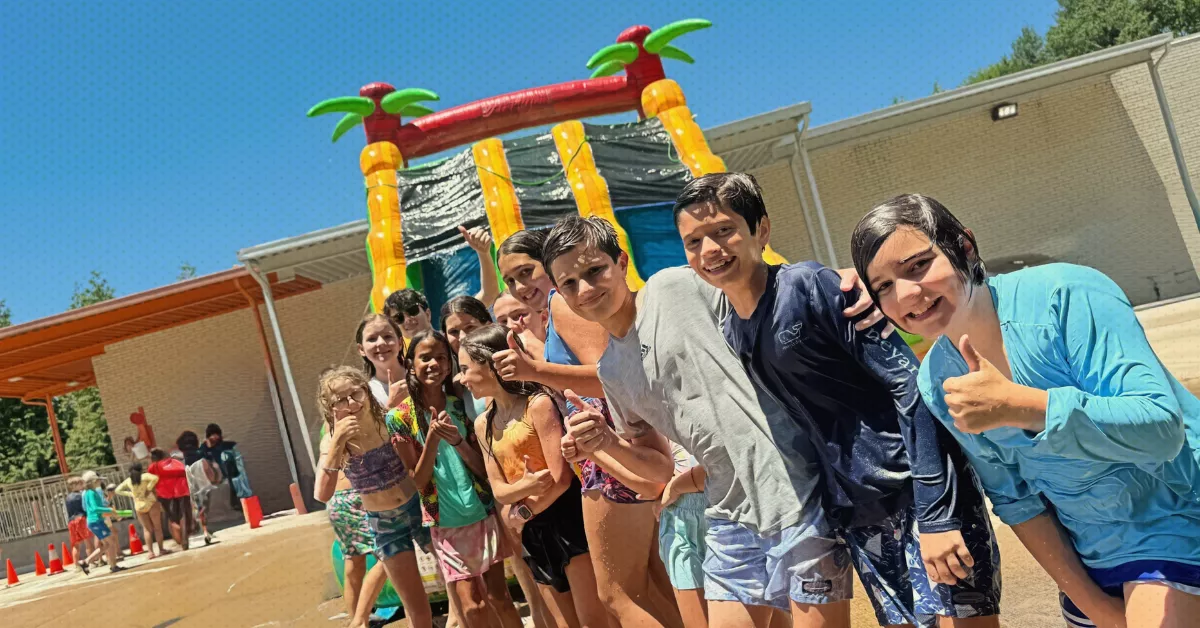
Charlotte families seeking affordable summer camps with a developmental focus have a standout option in Mission Grit. Unlike traditional Charlotte summer camps centered on sports competition or performance showcases, this program uses team challenges rather than contests to build confident, capable children.
Mission Grit Leadership Summer Camp
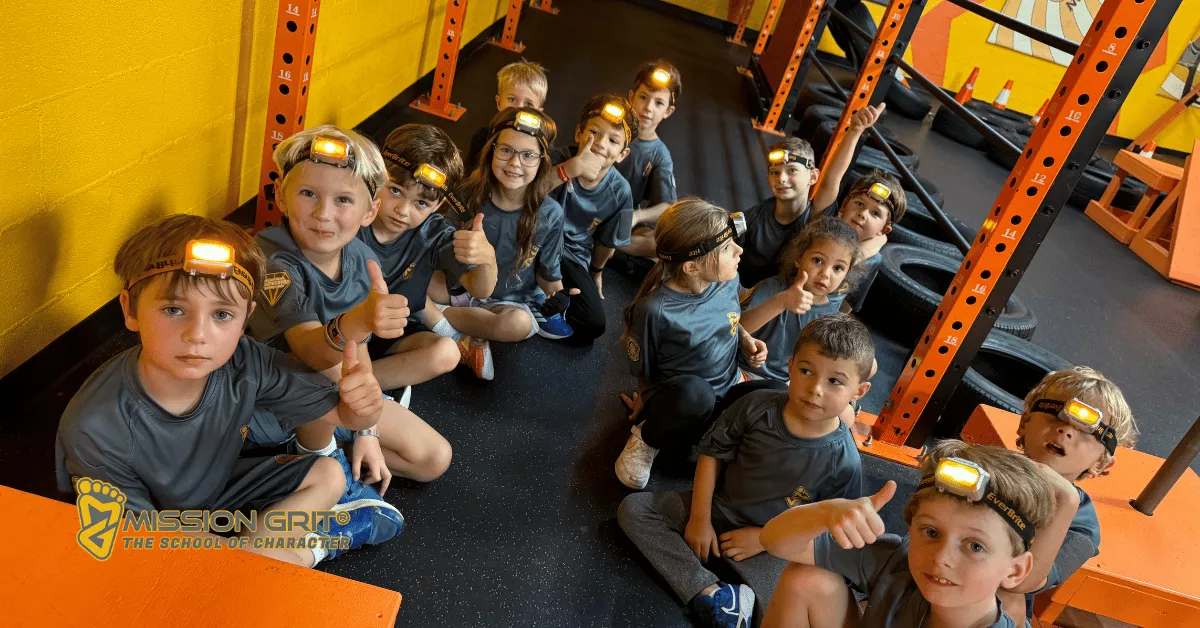
Mission Grit’s Leadership Summer Camp uses full-scale indoor obstacle courses, problem-solving quests, and collaborative activities to build what they term the S.P.I.R.I.T qualities: Science-based thinking, Problem-solving, In-motion learning, Respect, Interactive engagement, and Teamwork.
Located at 6311 Carmel Rd in Charlotte, the program runs full days from 8:00 AM to 4:00 PM with flexible drop-off between 8:00 and 9:00 AM. This structure accommodates working parents while maintaining the predictability shy children need. The indoor facility means weather never disrupts the schedule, reducing anxiety for kids who struggle with unexpected changes.
The unique MGM (Mission Grit Money) points system teaches financial management and responsibility through earned rewards rather than competitive rankings. Children accumulate points for effort, collaboration, and character demonstration, never for beating peers.
The camp maintains small group sizes with appropriate age divisions, typically grouping 6-8-year-olds separately from 9-12-year-olds. Staff trained in the Mission Grit method understand how to recognize when a quiet child needs encouragement versus when they’re happily observing before joining.
Activities rotate daily with weekly themes including engineering challenges, survival skills, archery, fitness courses, relay races, mind games, and self-defense concepts. This variety keeps engagement high while allowing children to discover unexpected strengths.
When Mission Grit might not be the right fit
No single camp serves every child’s needs. Mission Grit works best for shy children ready for group settings who benefit from physical activity and team challenges. Consider alternative options if:
Your child needs therapeutic support beyond typical camp settings. Children requiring one-on-one counseling for severe anxiety, trauma recovery, or intensive behavioral interventions benefit more from specialized therapeutic programs with licensed mental health professionals on staff.
Physical activity triggers significant resistance. While obstacle courses offer varying difficulty levels, children with strong aversions to movement-based activities or physical challenges may prefer art-focused, STEM-intensive, or nature exploration camps emphasizing different skill sets.
Your child functions best with complete activity choice. Mission Grit’s structured daily rotation works well for kids who thrive with clear expectations, but children needing extensive control over their schedule may prefer camps offering more self-directed free choice periods.
Camp resistance runs extremely high. If your child shows persistent distress about attending any camp despite preparation and discussion, starting with shorter trial programs (half-day or drop-in sessions) builds comfort before committing to full weeks.
Extensive special needs accommodations are required. While small groups benefit many neurodivergent children, kids needing significant modifications beyond typical camp capabilities should seek specialized programs explicitly advertising expertise in specific conditions.
Why “Team Challenges” work better than competition for shy kids
Competition creates winners and losers, a binary outcome that magnifies social anxiety for shy children. When camps emphasize beating others, reserved kids often withdraw rather than risk public failure. Studies show cooperative games enhance prosocial behaviors like sharing more effectively than competitive formats, particularly for children developing social skills.
Team challenges reframe success as collective achievement. When an obstacle course requires five children to work together, every participant contributes essential pieces. The quiet strategic thinker offers as much value as the athletic climber. This positive interdependence helps shy kids recognize their worth within groups.
Pioneers in cooperative learning research, Dr. David W. Johnson and Roger T. Johnson, found that cooperative approaches enhance social skills and promote self-esteem, particularly through structured teamwork that values every child’s contribution. Their foundational work shows how collaborative settings fundamentally change how children experience group activities.
For shy children specifically, team challenges remove performance pressure while maintaining engagement. A child can participate at their comfort level, perhaps starting by handing materials to teammates before gradually taking on more visible roles. There’s no spotlight moment where they must perform solo while others watch and judge.
Mission Grit structures activities so every child experiences tangible success daily, building what researchers call mastery-based confidence. Completing an obstacle course section or solving a team puzzle creates concrete evidence of capability. These achievements accumulate, gradually shifting a shy child’s internal narrative from “I can’t” to “I haven’t yet.”
How to Choose the Right Camp for Your Shy Child (Quick Scoring Table)
Comparing Charlotte day camps requires looking beyond glossy brochures to evaluate specific features that impact shy children. Use this scoring framework to objectively assess your options, rating each camp on a scale of 1-5 for these critical factors.
| Factor | What to Look For | Red Flag | Score (1-5) |
| Group Size | 6-12 campers per group | Groups exceeding 15+ children | ___ |
| Staff Ratio | 1:4 to 1:8 counselors to children | Ratios above 1:12 | ___ |
| Activity Structure | Mix of collaborative and solo tasks with choice | All-group, all-day requirements | ___ |
| Quiet Spaces | Designated calm areas, 30-60 min daily downtime | No breaks, constant high-energy activities | ___ |
| Staff Training | Specific strategies mentioned for shy/anxious kids | Generic inclusivity statements only | ___ |
| Participation Flexibility | Optional joining, buddy systems, deferred entry | Mandatory participation in all activities | ___ |
| Communication | Camp seeks detailed child information before start | Minimal intake, generic forms | ___ |
| Schedule Predictability | Published daily routines, consistent timing | Surprise activities, frequent changes | ___ |
| Competitive vs Cooperative | Team challenges, mastery focus, personal growth emphasis | Tournaments, rankings, public performance pressure | ___ |
| Sensory Considerations | Indoor/outdoor options, volume control, allergy-conscious | Loud environments only, limited accommodations | ___ |
Scoring Guide: 40-50 points indicates excellent fit for shy children; 30-39 points suggests good potential with some concerns to address; below 30 points signals significant compatibility issues worth reconsidering.
When evaluating programs for neurodivergent children, apply this same framework with additional weight on sensory accommodations and communication methods. Many features supporting shy children—like predictable schedules and quiet spaces—also benefit kids processing social and sensory information differently.
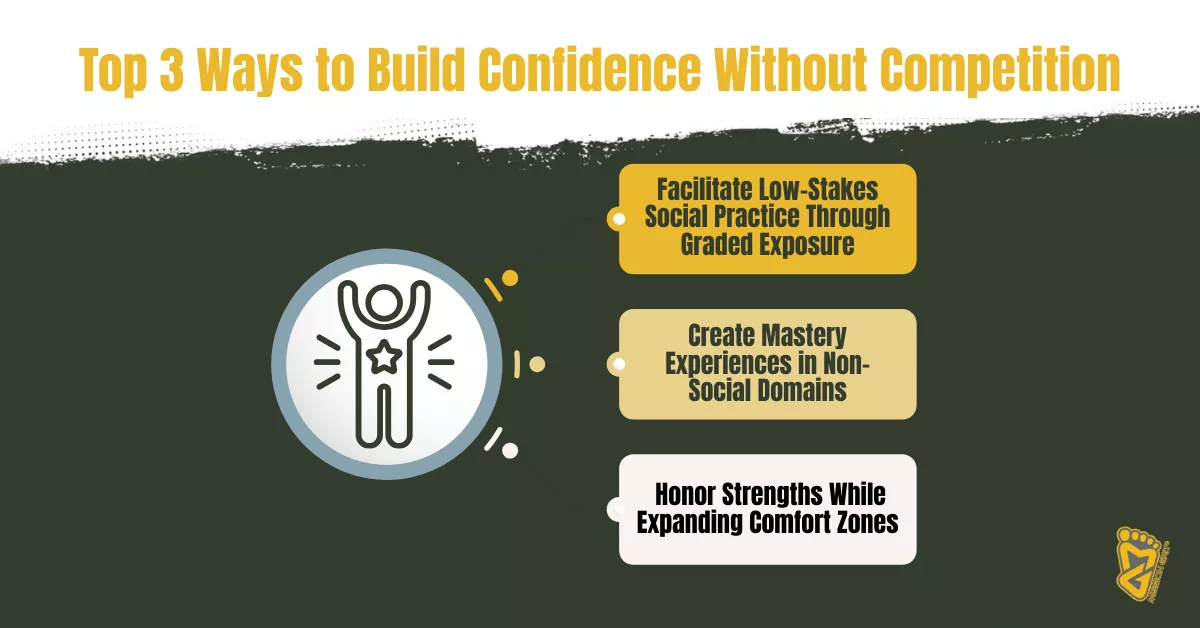 Top 3 Ways to Build Confidence Without Competition
Building genuine confidence in shy children requires patience and the right environmental conditions. These three evidence-based approaches work together to create meaningful growth without the anxiety competition triggers.
1. Facilitate Low-Stakes Social Practice Through Graded Exposure
Shy children need structured opportunities to practice social behaviors in predictable, short-duration activities. Start with observation, progress to parallel play or work, then move toward direct collaboration.
Mission Grit’s approach exemplifies this progression. A new camper might watch teammates navigate an obstacle course before taking a turn. Next session, they join as a timer or equipment holder. Eventually, they’re strategizing with the group and actively participating. Each step builds confidence through small, manageable risks rather than forcing immediate full participation.
Research confirms cooperative strategies improve shy children’s participation when programs use careful pairing and delayed corrective feedback. The key lies in scaffolding transitions at each child’s pace while maintaining gentle forward momentum.
2. Create Mastery Experiences in Non-Social Domains
Confidence built through skill mastery transfers to social situations. When shy kids accomplish something concrete—completing an obstacle course, building a successful structure, or solving a complex puzzle—they internalize evidence of their capability.
Nature-based activities and hands-on challenges work particularly well because they provide clear success markers independent of social performance. A child who successfully navigates a rope course or designs a working catapult gains tangible proof of competence. This internal foundation makes social risks feel more manageable.
The progressive achievement model matters greatly. Activities should offer appropriate challenge levels where effort leads to success. Well-designed programs adjust difficulty as children develop skills, maintaining that sweet spot where growth happens.
3. Honor Quiet Strengths While Gently Expanding Comfort Zones
Shy children often possess valuable qualities like empathy, observation skills, careful listening, and thoughtful analysis. Camps that recognize and celebrate these traits validate who children already are while encouraging growth.
Staff training becomes crucial here. Counselors need skills to praise a quiet child’s insight during team planning or acknowledge how their careful observation helped the group solve a problem. This positive reinforcement shows shy kids their natural tendencies have worth, reducing pressure to become someone they’re not.
Simultaneously, gentle encouragement helps children stretch beyond comfort zones in supportive contexts. A counselor might say, “I noticed you have good ideas during planning. What if you shared one thought with the group during our next challenge?” This invitation respects the child’s pace while opening growth opportunities.
FAQs Parents Ask Before Booking
How do I know if my shy child is ready for summer camp?
Consider your child’s current social functioning and their input. If they express curiosity about camp or have successfully managed shorter group settings like playdates or after-school activities, they may be ready. Visit potential camps together so your child can visualize the space and meet staff. Let your child help choose their camp option, as research indicates children with more say in attending demonstrate lower separation anxiety.
What if my child refuses to participate in activities?
Quality camps working with shy children understand participation takes many forms. Observation often represents a valid first step. Your child might watch activities, help with setup, or play a supporting role before joining directly. Trained counselors use gentle scaffolding rather than pressure, honoring individual pacing while providing encouragement. Discuss participation flexibility with any camp during enrollment to confirm their philosophy aligns with your child’s needs.
Should I send my shy child with a friend or sibling?
Having a familiar buddy provides initial comfort and eases transition anxiety, particularly for first-time campers. However, ensure the camp facilitates meeting other children too, so your shy child doesn’t rely exclusively on their buddy. Small group structures help children form multiple connections naturally through collaborative activities. Avoid pairing with highly dominant or outgoing friends who might unintentionally overshadow your quieter child in group settings.
How much does Mission Grit summer camp cost?
Mission Grit charges $90 per day for their no-school day camps. Contact them directly at 704-733-9103 or visit missiongrit.com for current summer camp rates and availability. When comparing costs, remember that lower prices often mean larger groups and fewer staff, sacrificing the individualized attention shy children require.
What should my child bring to Mission Grit camp?
The active nature of obstacle courses requires comfortable clothing children can move freely in. Bring water for hydration throughout the day. The facility is allergy-conscious and nut-free, so pack appropriate snacks if your child needs them. Contact Mission Grit directly for their complete packing list, as requirements may vary by session.
How does the camp handle social conflicts or anxiety moments?
Small groups enable staff to notice when children struggle. Trained counselors use positive reinforcement, celebrating effort and character rather than outcomes. If your child experiences anxiety, staff can offer quiet space, redirect to a preferred activity temporarily, or provide one-on-one support. Discuss your child’s specific triggers and coping strategies during enrollment so counselors can implement personalized approaches.
Can my child attend if they have special needs or are neurodivergent?
Mission Grit’s small groups and individualized attention benefit many neurodivergent kids, though it operates as a general camp rather than a dedicated special needs program. Contact them directly to discuss your child’s specific needs and determine if their program provides appropriate support. For children requiring extensive accommodations beyond typical camp capabilities, seek specialized programs explicitly advertising expertise in your child’s specific condition.
Conclusion
Finding summer camps for shy kids in Charlotte means looking beyond traditional programs emphasizing competition and performance. Your quiet, thoughtful child deserves an environment recognizing their unique strengths while gently building confidence through collaboration.
Mission Grit Leadership Summer Camp offers Charlotte families an alternative where team challenges replace competitive pressure, small groups ensure personalized attention, and trained staff understand how to support reserved children. The research confirms what many parents already sense—cooperative approaches benefit social development far more effectively than competitive settings, particularly for children building confidence.
Ready to explore whether this approach fits your child’s needs? Visit Mission Grit’s website or call 704-733-9103 to discuss how their non-competitive program aligns with your child’s temperament and developmental stage. Their small group sizes mean limited availability, so early inquiry helps you secure options for summer planning.
Your child’s confidence journey starts with one brave step—finding a camp that meets them exactly where they are.