

Day camp vs overnight camp Charlotte & Fort Mill is one of the biggest summer decisions parents make, and the wrong choice can turn “camp” into a stress test for the whole family. The right choice comes down to readiness, structure, and what you want your child to gain this summer.
At Mission Grit, we offer high-structure day camps serving Charlotte and Fort Mill families, built around obstacle courses, scenario-style challenges, and teamwork. If you want to compare formats and make a confident decision, start here, then come see the facility in person. Book a tour or call Mission Grit →
TL;DR: Day Camp vs Overnight Camp Charlotte NC & Fort Mill
Most families should start with a high-structure day camp first, then consider overnight camp later, after readiness is proven. The American Academy of Pediatrics notes many kids are ready for overnight camp around ages 7 to 8, but readiness varies and there is no single rule. Our recommendation is simple: choose the format that creates momentum — confidence, routines, teamwork — without overloading your child on week one.

Key Points:
- Day camp is often the best first camp for first-timers because kids get growth plus the comfort of home each night
- Overnight camp can be a great experience, but it demands separation readiness and self-care skills
- Structure beats hype — a clear schedule and coached teamwork reduce overwhelm
- Mission Grit’s Leadership Summer Camp is built to develop confidence, leadership, and resilience in a full-day, non-competitive environment serving Charlotte and Fort Mill
Day Camp vs Overnight Camp Charlotte & Fort Mill: Quick Comparison Table
If you want a decision you can trust, compare formats on the factors that actually impact outcomes.
| Factor | Day Camp | Overnight Camp |
| Nighttime separation | None — kids sleep at home | Multi-night separation |
| Best for first-time campers | Yes | Sometimes, only if readiness is strong |
| Emotional load | Low — daily reset at home | High — no reset |
| Independence growth | Strong, built through daily reps | Strong, built through immersion |
| Logistics | Easier for most families | More planning, packing, travel |
| Cost structure | Typically lower than overnight | Typically higher due to lodging and meals |
| “If this goes badly…” risk | Easier to adjust quickly | Harder to pivot mid-session |
Wrap-up: If your child has never done camp before, day camp is usually the lower-risk path to confidence, independence, and real skill growth.
Why High-Structure Day Camp Is the Best “First Step” for Most Kids
Parents often debate day vs overnight, but the bigger variable is structure. A low-structure camp can be chaotic for first-timers. A high-structure day camp creates safety through predictability, and kids grow faster when they know what’s coming next.
What “high structure” looks like in real life
High structure usually means:
- Clear transitions, not constant waiting around
- Staff-led team formation, not “go make friends”
- A plan for nervous kids that does not rely on “tough it out” through rapport building
- Consistent expectations for behavior and participation
When the schedule is clear and the team dynamics are coached, kids stop spending mental energy on uncertainty. They put that energy into learning, movement, and confidence building.
How Mission Grit fits the “best first camp” lane
Our Leadership Summer Camp is a full-day, high-energy experience designed to build confidence, leadership, and resilience for Charlotte and Fort Mill families. It is set up as a non-competitive environment and includes obstacle courses, scenario adventure quests, team-building challenges, leadership development, and more.
If you want to see everything we offer beyond summer camp, including school-break camps and our year-round programs, start here: Explore our programs at Mission Grit →
Wrap-up: Day camp is not the “lesser” option. A high-structure day camp can be the smartest first move.
How to Know If Your Child Is Ready for Overnight Camp (Guardrails, Not Hype)
Overnight camp can be a great goal. The problem is when parents treat it like the default upgrade. Readiness is the gate.
The American Academy of Pediatrics says there is no hard-and-fast rule, but notes many children are ready for overnight camp around ages 7 to 8. The key word is “many,” not “all.”
The American Camp Association also emphasizes readiness, and specifically suggests considering day camp as a way to prepare kids for future overnight camp.
Overnight readiness checklist (use this before you pay)
A child is more likely to succeed at overnight camp if they can:
- Handle separation: positive sleepovers or time away from home without panic
- Manage self-care: basic routines without constant reminders
- Advocate for help: willing to tell an adult what they need
- Recover from setbacks: can bounce back when a game, challenge, or social moment goes poorly
- Actually want it: sustained excitement, not just agreement
If you are unsure, do this first
Choose a strong day camp week first, then reassess. If your child leaves day camp energized, proud, and ready to go back, you have proof of readiness progression. If your child melts down every morning, you just saved yourself from an expensive overnight experience that can sour camp for years.
Good, Better, Best: The Camp Path That Builds Momentum in Charlotte & Fort Mill
Good: Basic day camp
Basic day camps can be fun and convenient, but they often deliver inconsistent growth if the day is mostly free play and unstructured social dynamics.
Decent: Generic Basic Camps
Basic day camps often exist mainly to help parents cover childcare during the workday. While they can serve that logistical purpose, they frequently provide inconsistent developmental value for children.
In many generic camps, the daily schedule is dominated by free play and unstructured social time. Without structured programming, children may spend most of the day simply occupying time rather than building meaningful skills. Another common challenge is low staff oversight or minimally trained counselors, which can lead to social environments where kids begin adopting negative habits from each other instead of being guided toward positive behavior.
These camps can also feel monotonous, lacking the variety, challenge, and excitement that help children grow physically, mentally, and socially.
While generic camps are usually priced slightly lower than specialized programs, the difference is often not dramatic—typically around $30–$50 per week less than structured camps.
This raises an important question for parents:
Is a small weekly savings worth missing the opportunity for a camp experience designed to build confidence, resilience, teamwork, and real growth?
Better: Structured day camp that trains independence
Better day camps intentionally teach routines, teamwork, follow-through, and confidence through guided challenges.
Best: A developmental, high-structure day camp that builds leadership
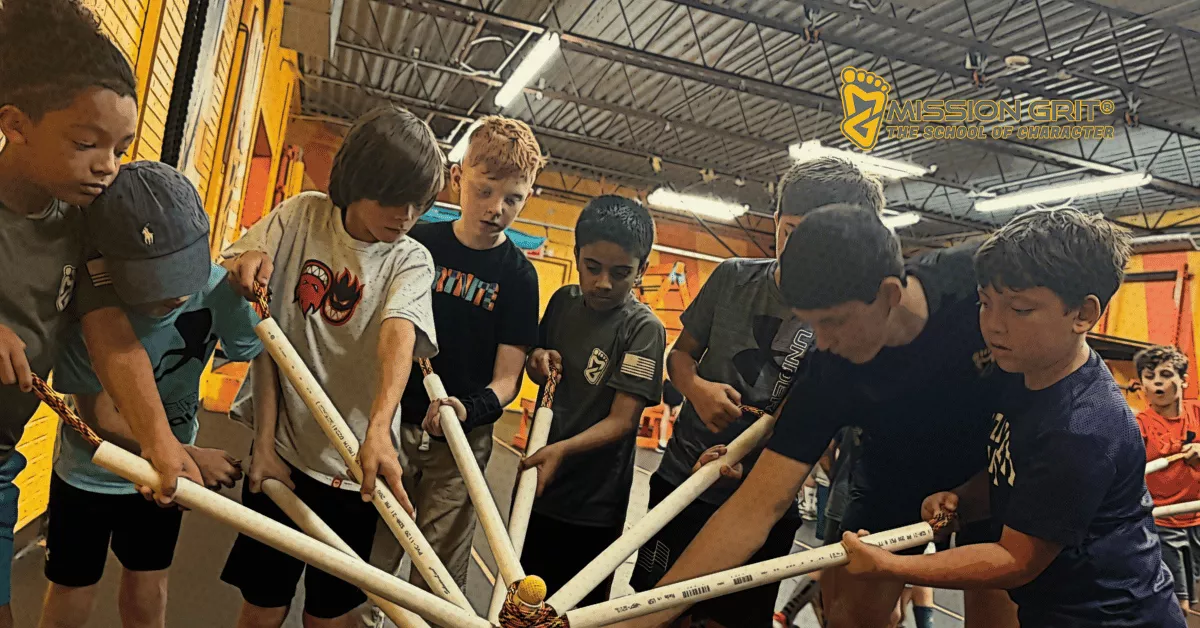
Mission Grit’s camps are 100 percent developmental, working across physical, mental, social, and character development. Our Leadership Summer Camp is intentionally non-competitive and built around teamwork, collaboration, and constantly varied activities — serving families across Charlotte and Fort Mill.
If you are comparing camps, the “best” option is the one that can clearly explain what your child gains after one week, not just what they do.
Wrap-up: Parents win when camp has a method, not just activities.
What Our Day Camp Looks Like at Mission Grit
If you are comparing day camp vs overnight camp in Charlotte & Fort Mill NC, you need concrete details. Here are the operational facts parents typically ask us on the phone.
Hours and logistics (the stuff that makes or breaks summer)
Our Leadership Summer Camp lists:
- Camp hours: 8:00 AM to 4:00 PM
- Drop off: 8:00 AM to 9:00 AM
- Pick up: 3:00 PM to 4:00 PM
If you want to confirm the best time to tour or call, our hours of operation are published here: Mission Grit contact page →
Ages, environment, and camp style
Our Leadership Summer Camp has an age minimum of 6+, is coed, and is designed as a non-competitive environment with a high-structure, social-centered experience. We are also allergy conscious and a nut-free facility.
Activities that translate into real outcomes
Our camp activities include obstacle courses, scenario adventure quests, team-building challenges, leadership development, engineering activities, fitness, mind games, and more. We also include a financial management layer using Mission Grit Money (MGM points), where campers practice accountability and decision-making in a hands-on way.
Staffing
Our camps are powered by year-round staff, and some mentors are military veterans who bring real-world experience and a high standard of engagement to every session.
Pricing
We publish camp pricing on our site, and pricing can vary by season and booking window. The simplest way to stay accurate is to check the current camp page for the week you are considering, then call us if you want help picking the right fit. Our Programs page also lists plan-based pricing options.
Wrap-up: You do not need a perfect camp. You need the right structure and the right environment for your child’s current stage.
Top 3 Tips to Choose the Right Camp Format
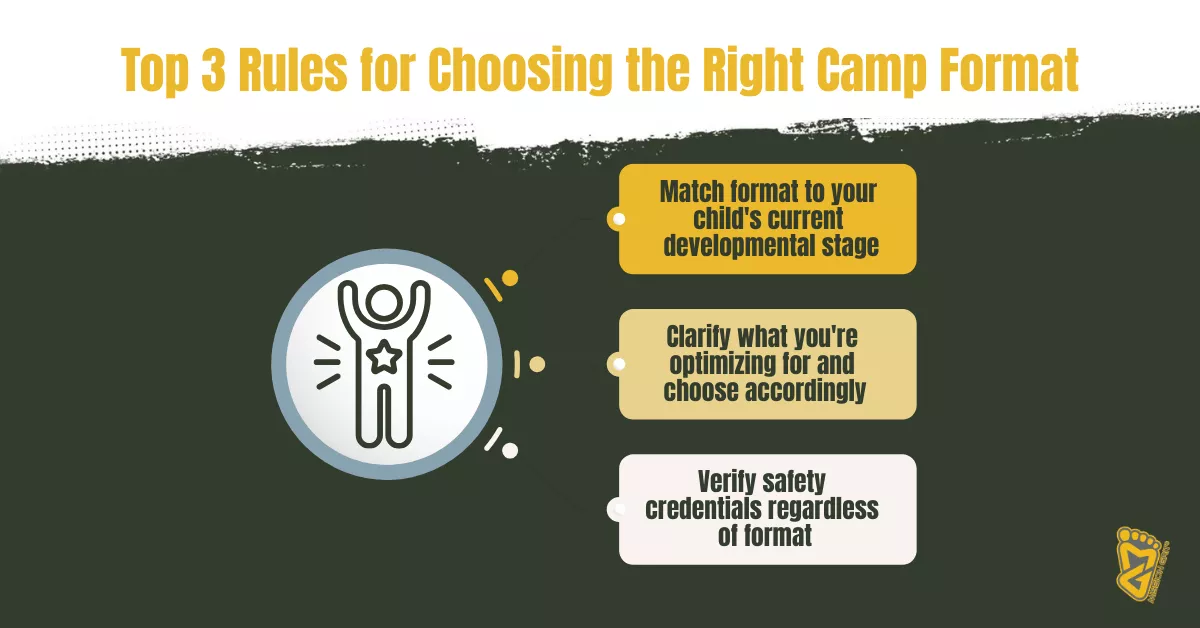
- Pick the format that reduces failure points. If your child is new to camp or sensitive to transitions, start with day camp first so they build momentum without the separation load.
- Choose structure over variety. A clear schedule and coached teamwork usually beat a long list of activities.
- Use day camp as training for overnight camp. If overnight camp is the goal, day camp is often the fastest path to readiness, especially for kids under 7, as the American Camp Association notes.
Your job is not to buy the “best camp.” Your job is to pick the environment where your child wins week one.

FAQ: Day Camp vs Overnight Camp Charlotte & Fort Mill, NC
Is day camp “less valuable” than overnight camp?
No. A high-structure day camp can create major gains in confidence, teamwork, and independence without multi-night separation. Overnight camp adds immersion, but immersion only helps when your child is ready for it.
What if I worry about homesickness?
Homesickness is common, and preparation helps. The American Psychological Association notes that homesickness is a normal response when kids are separated from familiar environments, and shares practical steps like planning ahead and practicing sleepovers.
Can day camp help my child become ready for overnight camp later?
Yes. The American Camp Association specifically suggests considering day camp as preparation for future overnight camp, especially for younger children.
Conclusion: Choose the Format That Builds Momentum
Day camp vs overnight camp Charlotte & Fort Mill is a readiness decision, not a status decision. Overnight camp can be a great goal, but for many families the smartest first step is a high-structure day camp that builds confidence, teamwork, and independence without the multi-night separation risk.
At Mission Grit, our Leadership Summer Camp is designed as a full-day, non-competitive, developmental experience that builds confidence, leadership, and resilience through obstacle courses, team challenges, and real-world scenarios — serving Charlotte and Fort Mill families all summer long. If you want to see whether our environment is the right fit for your child, the fastest path is a tour and a quick call. Book a tour or call Mission Grit →
If you want to compare all options we offer (summer camp, school-break camps, and our year-round programs), you can start here: Explore our Mission Grit programs →