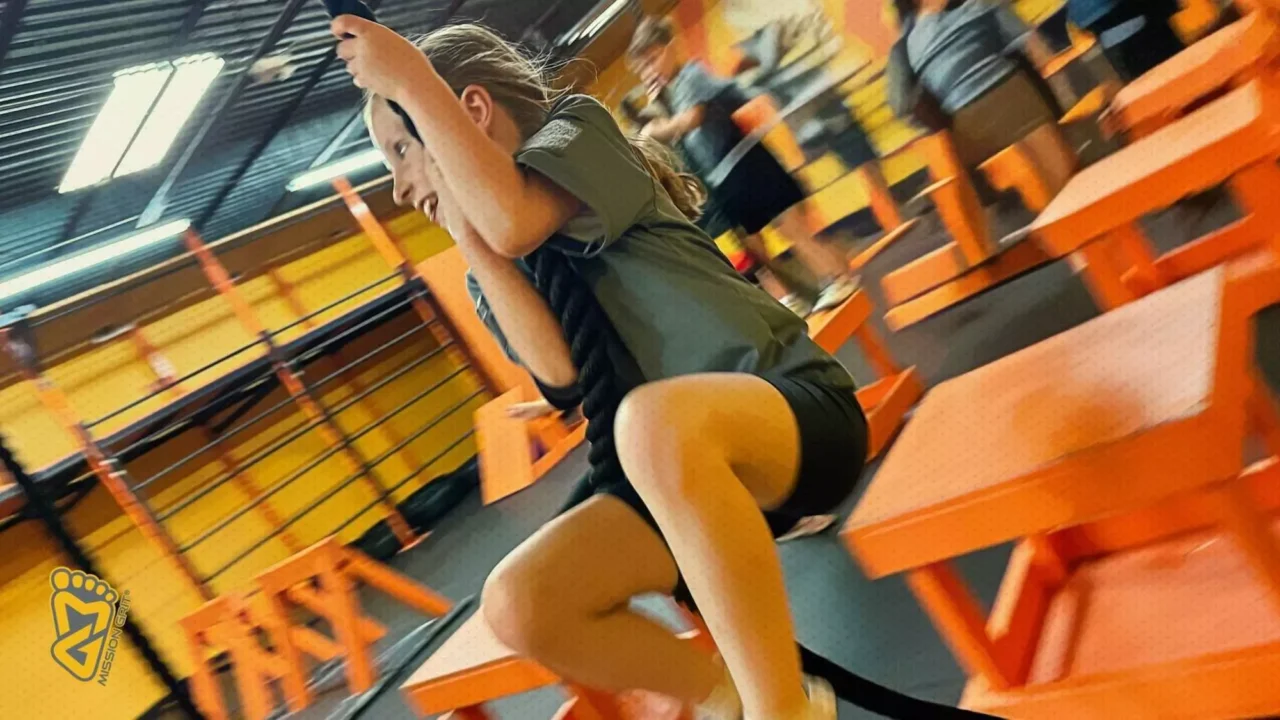
The youth sports landscape in Charlotte and Fort Mill is great if your kid is wired for league soccer, basketball, or baseball. If they are not, the options narrow fast. Obstacle courses for kids are a different kind of physical program. Every kid completes the course at their own pace, nobody sits the bench, and confidence is built rep by rep instead of awarded at the end of a season. At Mission Grit, we built the program around the kid who has not found their fit in traditional sports, because every kid deserves a place where they can develop physically without a scoreboard deciding whether they belong.
This guide explains why obstacle courses work especially well for non-athletic kids, what the developmental research says, and what an Xplor session at Mission Grit actually looks like for a kid who has never thought of themselves as athletic.
 TL;DR
TL;DR
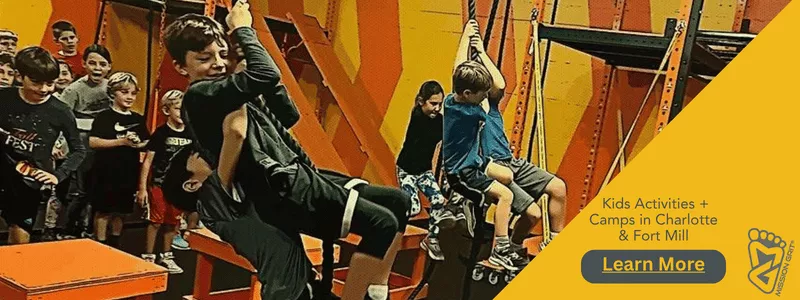
Obstacle courses meet kids where they are. There is no try-out, no draft, no “starter vs. benchwarmer” hierarchy. A non-athletic kid who could not climb the cargo net her first day will hit the top by month two, and that visible progress is the confidence engine that league sports rarely deliver to kids who are not already on the elite track. Mission Grit’s Charlotte and Fort Mill programs are designed for this kid.
Key Points
- Obstacle courses are progress-based, not performance-based. Every kid measures against their own first attempt, not against a teammate.
- No bench. Every kid is moving the entire session, which is the opposite of most rec league experiences.
- Confidence is built through visible, repeatable wins. Climbing one inch higher than last week is a measurable accomplishment.
- Physical literacy translates outside the gym. Better balance, agility, and body awareness make every other sport (and life skill) easier.
- Social benefits are baked in. Kids cheer each other on through the course, which builds belonging without competition.
- Non-athletic kids actually do better here. Without the pressure of a scoreboard, they take risks they would never take in a league setting.
- Charlotte and Fort Mill families have an option that traditional sports leagues do not provide. Mission Grit fills the gap for the kid who needs movement plus support, not movement plus competition.
| Try a single Xplor session before committing to a recurring schedule. Mission Grit’s trial class is the easiest way to see if obstacle courses are the right fit for your kid. Book a trial class. |
Why “Non-Athletic” Kids Often Thrive on an Obstacle Course
The framing of “athletic vs. non-athletic” is a league-sports invention. Every kid has motor skills they can develop. Obstacle courses make that development visible in a way scoreboards never do.
League sports filter for early-developing physical skills. A kid who is six months behind on coordination at age 7 can look “non-athletic” forever even if they would catch up given a different environment. The research on physical literacy from groups like the American Academy of Pediatrics consistently shows that broad motor development beats early sport-specific specialization for kids who have not found their fit yet.
Obstacle courses remove the comparison frame. There is no defender, no opponent, no scoreboard. The course is the only thing the kid is “playing against,” and the course adapts to them. Mission Grit instructors are trained to scale challenges up or down for each kid in real time. A wall that one kid scales unassisted is a wall the next kid scales with a foot-up. Both finish the course.
Research shows that successfully navigating an obstacle course gives children a sense of accomplishment that translates into confidence in other areas, and that this works particularly well for kids who have not had wins in traditional athletics.
 What an Xplor Session Looks Like for a Non-Athletic Kid
The format is engineered to lower the self-consciousness wall before the real work begins.
Warm-up: 5 to 10 minutes of dynamic movement that is silly enough to lower the self-consciousness wall. Bear crawls, animal walks, jumping jacks. No drills.
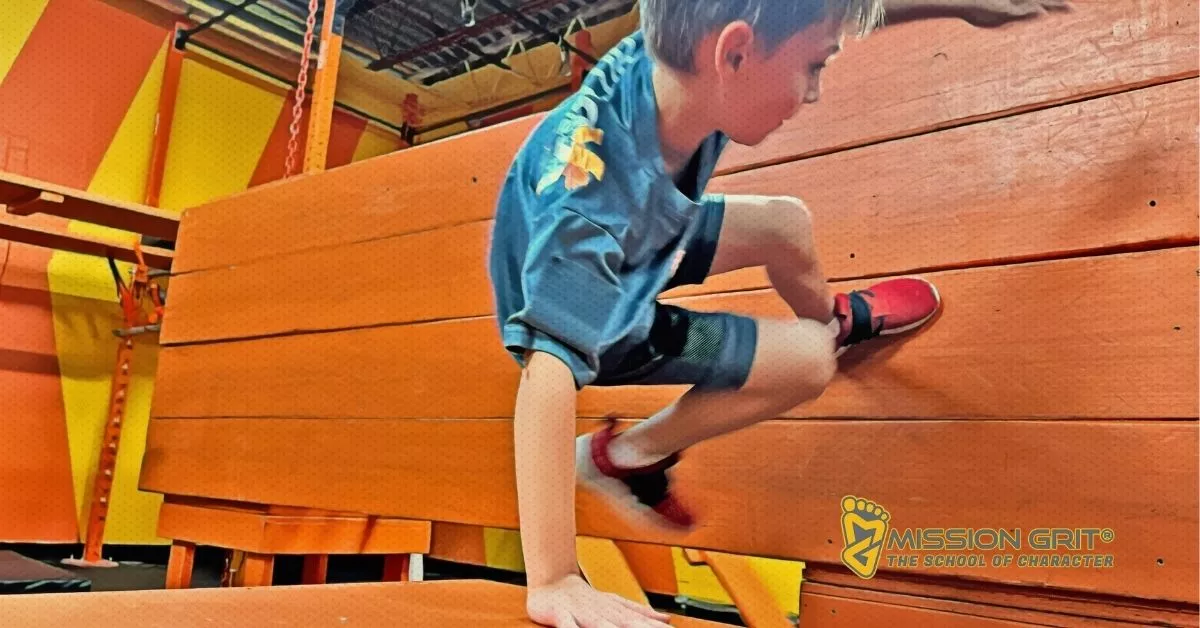
Skill block: 15 to 20 minutes on one or two specific physical skills (climbing, balance, vaulting). Coaches break each skill into smaller progressions so every kid finds the version they can do today.
Course: 20 to 25 minutes running through the day’s themed obstacle course. Kids cycle through repeatedly, and the coaches adjust scaling on the fly so every rep is “stretch but possible.”
Mindset moment: A short closing circle on the day’s character theme: perseverance, leadership, supporting teammates. Kids share something they did better than last week.
The shift parents notice is consistent. A kid who came in shy and unwilling to try the cargo net will, by week 4, be the one helping the new kid figure out the foot placement.
What the Research Says About Obstacle Courses and Confidence
The developmental literature on obstacle courses and kid confidence is increasingly clear.
Sense of empowerment. Successfully completing an obstacle course produces a sense of accomplishment similar to what an athlete feels after winning a competition. For non-athletic kids, this is often their first taste of that feeling.
Stress hormone reduction. Vigorous obstacle work reduces cortisol and adrenaline while increasing endorphins, which improves mood and lowers anxiety per the CDC.
Problem-solving and resilience. Figuring out a new obstacle teaches a kid that effort plus iteration solves problems, which is the same mental loop that improves school performance.
Motor skill development. Climbing, crawling, balancing, and jumping build coordination and body awareness, which are foundational for every other sport, dance, or physical pursuit a kid might try later.
Social-emotional benefits. Kids who navigate the course in groups develop teamwork, communication, and empathy without needing to be on a “team.”
How This Differs From League Sports in Charlotte and Fort Mill
The differences are structural, not marketing.
No try-outs. Mission Grit does not assess your kid before letting them participate. Every kid is welcome on day one.
No game-day pressure. No coaches yelling from the sidelines, no parents on bleachers tracking errors.
No specialization. Kids develop a broad athletic base instead of narrowing into one sport at age 8.
No season cycle. The Xplor program runs continuously, so progress is uninterrupted by seasonal gaps.
Lower time and cost commitment than club sports. A weekly Xplor session is a fraction of the cost and time of competitive club teams.
Designed for the long game. Mission Grit’s goal is a kid who is physically literate, confident, and self-disciplined at 18, not a kid who peaked at 11.
| See the Xplor program in action. The flagship recurring program combines obstacle courses, problem-solving, and leadership for kids who need steady reps to build confidence. Book a trial class. |
How Mission Grit’s Charlotte and Fort Mill Programs Help
Two locations serve the region. Charlotte HQ at 6311 Carmel Rd serves the Charlotte and surrounding Mecklenburg County area. The Fort Mill location serves South Charlotte, Fort Mill, Tega Cay, and the surrounding York County area.
The Xplor After-School Program is the flagship recurring program. Weekly classes combine obstacle courses, problem-solving, leadership, and physical fitness. The best fit for the non-athletic kid who needs steady reps to build confidence.
The trial class is the low-commitment way to see if Mission Grit is the right fit. Most parents see the shift after one session.
The founder-led approach matters. Paul Plotkin built Mission Grit on the four dimensions of development (physical, mental, social, character), and that framework runs through every session. The full backstory lives on the Mission Grit about page.
Coach training is the unsung piece. Instructors are trained to scale challenges up and down for each kid, so a non-athletic kid never gets left behind and an advanced kid never gets bored.
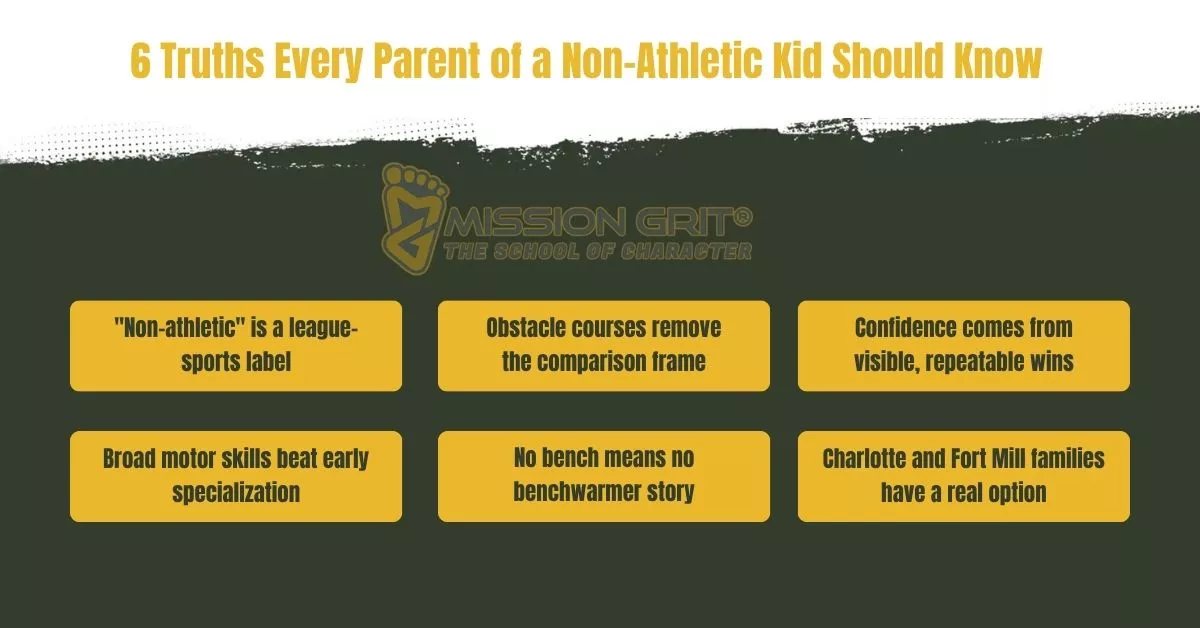 6 Truths Every Parent of a Non-Athletic Kid Should Know
A reference card:
- “Non-athletic” is a league-sports label. It usually means “early-developer screened out.”
- Obstacle courses remove the comparison frame. The course adapts to the kid.
- Confidence comes from visible, repeatable wins. One inch higher than last week.
- Broad motor skills beat early specialization. They translate to every other sport.
- No bench means no benchwarmer story. Every kid moves the whole session.
- Charlotte and Fort Mill families have a real option. Mission Grit was built for it.
 Conclusion
The kid who has not found their fit in soccer or basketball is not “non-athletic.” They just have not been in the right environment yet. Obstacle courses give every kid a way to build real physical confidence without the comparison frame that league sports impose.
Mission Grit was built by founder Paul Plotkin around the conviction that physical, mental, social, and character development belong in one program, and that every kid (athletic or not) deserves a place to develop them. The Charlotte and Fort Mill teams run the program with that conviction baked into every session.
| See if Mission Grit is the right fit for your kid. Book a trial class, or reach out to the Charlotte team or the Fort Mill team to learn more about Xplor. |